Tunis
De informatie die nuttig kan zijn voor uw reis.
Foto's van Tunis
Foto's van Tunis bij Panoramio
|
Reisadviezen en waarschuwingen Tunis
| |||||||||||||||||||||||||||||||||||||||||||||||||||||||||||||||






Tunis, TunesiëDinsdag 14, Juli |
|
Uit wikipedia over Tunis
||-
|
|}
Tunis (Arabisch: تونس Toenoes of Toenis) is de hoofdstad en grootste stad van Tunesië. De stad telde 728. 453 inwoners bij de volkstelling van 2004 tegen 596. 654 bij die van 1984. Het ligt in het uiterste noorden van het land, aan de Middellandse Zee. Direct buiten Tunis liggen de restanten van het oude Carthago. Vooral de thermen (baden), de graven, het amfitheater en de restanten van het aquaduct zijn bezienswaardig. Een aangename bijkomstigheid is dat de afgravingen dicht bij zee liggen. De warme bronnen van Antoninus Pius getuigen van de vroegere Romeinse aanwezigheid hier. Ook een museum behoort tot de aanwezige bezienswaardigheden. Immers, de geschiedenis begint hier al zo'n 8000 jaar v. Chr. In de tweede millennium v. Christus ontstond hier een Berberse plaats genaamd Tunes. In de loop van de eeuwen zou het een onderdeel worden van de Carthagen en later van Numidië. Gedurende de oudheid zou het altijd in de schaduw blijven staan van het nabij gelegen Carthago.
Met de komst van de Arabische legers in de 7e eeuw, kreeg de stad enige mate van betekenis als havenstad. In de 11e eeuw wist het als één van de weinige Tunesische steden, te ontsnappen aan de vernietigingen door de Banu Hilal. Van de 10e tot de 16e eeuw werd de stad geregeerd door een opeenvoling van Berberse dynastieën: de Ziriden, de Hammadiden, de Almohaden en de Hafsiden. Onder deze laatste twee, zou de stad uitgroeien tot één van de grootste en rijkste van de Islamitische wereld. Tot de 16e eeuw zou het de hoofdstad zijn van het koninkrijk van de Hafsiden. Net als de rest van Tunesië, werd de stad in de 16e eeuw verovert door de Ottomanen.
Zoals veel hedendaagse Islamitische steden heeft Tunis zowel een deel dat heel westers aandoet in architectuur, als een oude stad, wat vaak de medina genoemd wordt (Medina betekent gewoon stad in het Arabisch).
Het Bardomuseum met een aantal wereldberoemde Romeinse mozaïeken bevindt zich ook in Tunis. Bezienswaardig verder is de soek Bab-el-Bahar die gerekend wordt tot een van de mooiste van Noord-Afrika. Ieder ambacht heeft hier zijn eigen plek. Zadelmakers, parfumeurs, tapijthandelaren, koperslagers, juwelenhandelaren, pottenbakkers enz. Een oriëntaals handelsleven met specifieke geuren, een warboel van kreten en een rijk palet van kleuren. En daarbovenuit steekt de 44 meter hoge minaret van de moskee die uit de 8e eeuw stamt. Tegenover het Dar Hoessein -paleis (met museum voor islamitische kunst) staan de moskeeën El-Ksar en de Kasba met de fraaie minaretten (uit 1200). Niet alle moskeeën zijn vrij toegankelijk. De Moorse stijlelementen zijn overheersend. Achter het Belvedere-park, onderaan de heuvelhelling, ligt de meest bekende bezienswaardigheid; in de harem van het voormalige Bardo -paleis is een museum ingericht dat na het Egyptische museum in Caïro de grootste betekenis heeft. Een unieke tentoonstelling van Romeinse mozaïeken, modellen van belangrijke ruïnes, Fenicische vondsten, Romeinse sarcofagen enz. bijeengebracht in wel 30 zalen.
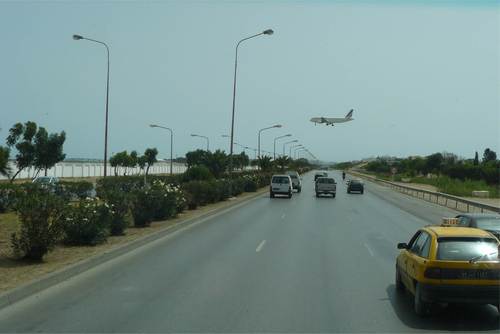
Tunis heeft een internationaal vliegveld en vanuit de haven zijn er regelmatige veerverbindingen naar Trapani op Sicilië, Italië. Hiernaast is het een universiteitsstad.
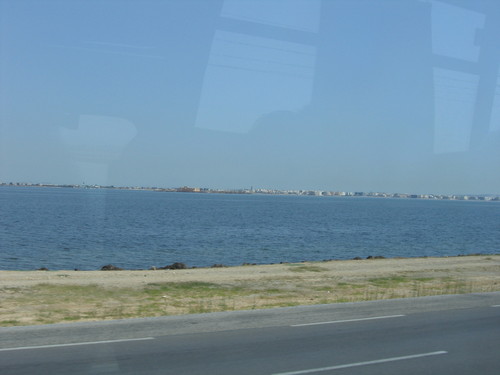
Tunis ligt aan het Tunismeer, (de baai van Tunis).


